
Hardee County Release Photo Meaning
A booking photograph records how a person looked during intake. HCSO confirms that adult arrestees are photographed and fingerprinted as part of booking. The image does not state whether the charge led to conviction, whether the case was dismissed, whether the person still remains in custody, or whether the person left for the community. Those questions require separate custody and court records.
Florida generally treats a sheriff-held booking photograph as an agency record under Chapter 119 unless an exemption, confidential status, or court order applies. Public-record status does not require an image to remain on a website forever. HCSO currently routes its jail arrest log through a mobile app, and it does not publish a verified browser-based recent-release photo archive. The source record may still be requestable after a live entry changes or disappears.
Find Hardee County Release Mugshots
No one source covers every released person. The correct channel depends on whether the custody episode belonged to HCSO, FDC, or another agency. A current app view can help identify a recent booking, while an archival record request is the more durable county route.
| Channel | Has photo? | How to access |
|---|---|---|
| HCSO mobile arrest log | Unverified in current app documentation | Use the official HCSO app and inspect the live booking fields. |
| HCSO Records | Requestable when public | Ask for the named booking photograph by email, app, mail, phone, fax, or in person. |
| FDC release search | Available on some records | Use photograph display controls for a state-prison offender, not a county-only stay. |
| VINELink | Possible, not guaranteed | Inspect the reporting agency's person record and attribute any image to that agency. |
| FDLE registry | Yes for qualifying registrants | Use only when the person has a public registration obligation. |
| News or HCSO posts | Sometimes | Treat as secondary discovery and confirm status through official records. |
| Commercial mirrors | May show an old image | Do not treat as authoritative; an image may be stale, mismatched, or lack a custody update. |
A photograph on an FDC detail is an FDC image and may not be the HCSO booking photo from a different arrest. Likewise, the FDLE registry is limited to people with qualifying registration duties. It is not a general list of Hardee County releases. Category-level commercial and news results may explain where copies surface, but they do not replace an official request.
Hardee County Release App Photos
Hardee County uses an app-first public interface. The HCSO inmate-search page directs readers to the sheriff's mobile app for the jail arrest log and warns that the information changes constantly. It does not document a booking-photo field, a post-release visibility period, or a 24-hour or 72-hour released-person filter. Those functions should not be assumed.
The official Hardee County Sheriff's Office app landing page offers routes for Apple and Google devices. HCSO also accepts public-record requests through the app. That makes the same tool both a live booking snapshot and a route to ask for the source image when the snapshot no longer helps.
The HCSO booking questions page confirms intake photography and explains the local handling of adult arrest photographs.
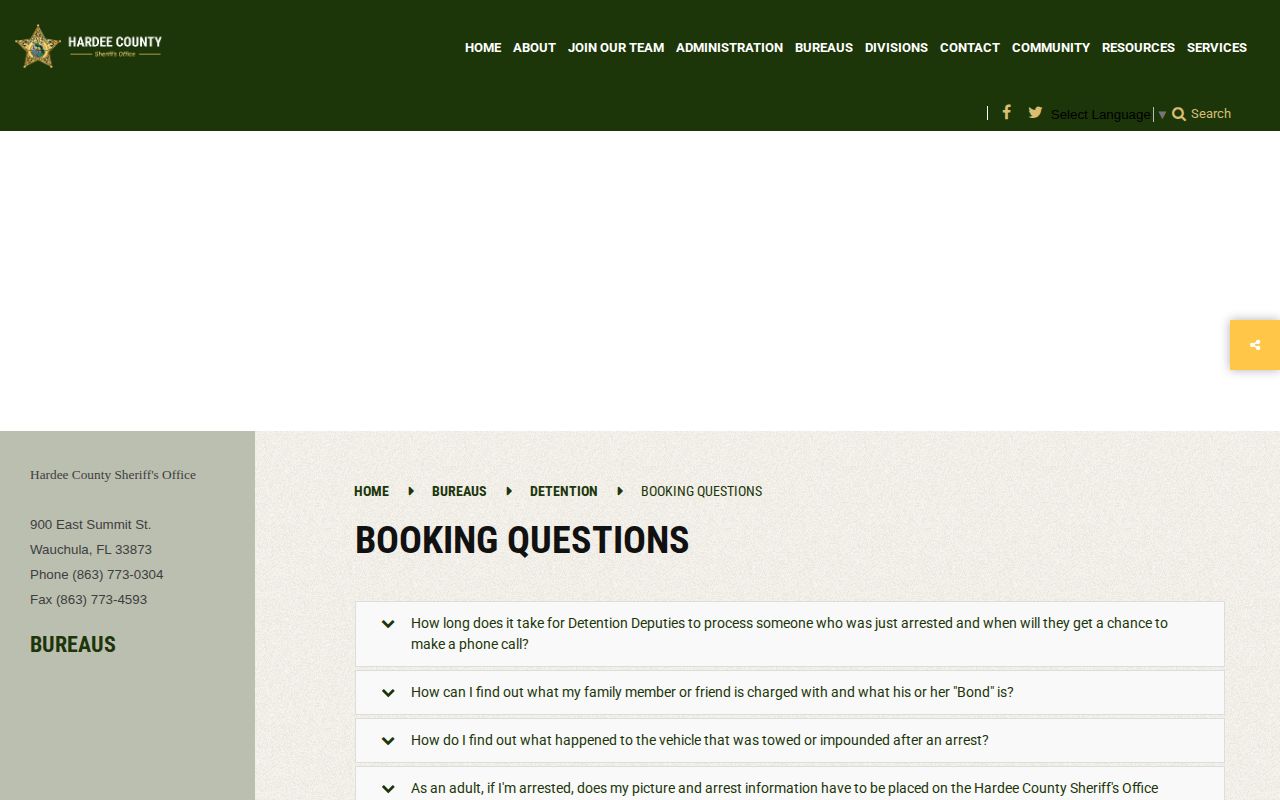
The official statement establishes that a photograph is created during adult booking, even though the current app's display and retention fields remain uncertain.
Note: Save a booking number or agency identifier while visible because a name alone may not isolate the correct Hardee booking.
Request Hardee County Booking Photos
The HCSO Records Custodian is the best official archival fallback for a county booking image. Make the request narrow enough to identify one event. Provide the full legal name and known aliases, date of birth, approximate booking date, arresting agency, and booking or case number if known. Ask for the booking photograph tied to that episode and, when release status matters, the booking-and-release sheet as a separate record.
- Identify the exact Hardee County booking through the app, Clerk case, or known arrest date.
- Send the request to records@hardeeso.com, use the official app, call (863) 773-0304 extensions 230 or 269, fax (863) 773-4593, or write to the Records Custodian at 900 East Summit Street, Wauchula, FL 33873.
- Describe the image as the booking photograph for the named booking episode. Add the booking number when available.
- Ask for a cost estimate before work begins. HCSO does not publish a fixed photo fee or promised turnaround on the records page.
- Review any response for redactions, an exemption citation, or notice that a sealed, expunged, juvenile, or protected record cannot be supplied.
Florida Statutes §119.07 calls for prompt acknowledgment and a good-faith response, but retrieval, redaction, format, and scope affect delivery time. The law permits actual duplication cost and a reasonable labor-based special service charge when extensive resources are required. A focused request tends to reduce ambiguity and helps the custodian locate the correct photograph.
Florida's GS2 retention schedule also separates web visibility from agency retention. Booking records and inmate-incarceration records can include identity material and related release details, with a minimum retention of one anniversary year after release. A jail docket book is permanent. These rules do not promise that each image stays in the app, but they support asking the Records Custodian for the maintained source after a live result is gone.
If a photograph is withheld, ask which exemption or confidential status applies. Juvenile material, protected information, and court-sealed or expunged records can require a different response from an ordinary adult booking. A custodian may redact exempt parts while producing the remainder of a public record. Do not infer that a missing image means the arrest never occurred or that the person remains held.
Hardee County State Release Photos
Use the FDC Inmate Release Information Search only when the person entered Florida state custody. Its search supports name, aliases, and the six-character DC number, plus photo-display controls and a photo-only filter. A released Hardee Correctional Institution record may include a photograph and state release history. A short HCSO stay that never became an FDC sentence may produce no state result at all.
The FDLE registry is narrower. Its public records carry photographs for qualifying sexual offenders and predators, including records with a released status that remains subject to registration. Do not infer that a person belongs in that registry merely because a booking photo exists. The official FDLE registry search is useful only for its stated group.
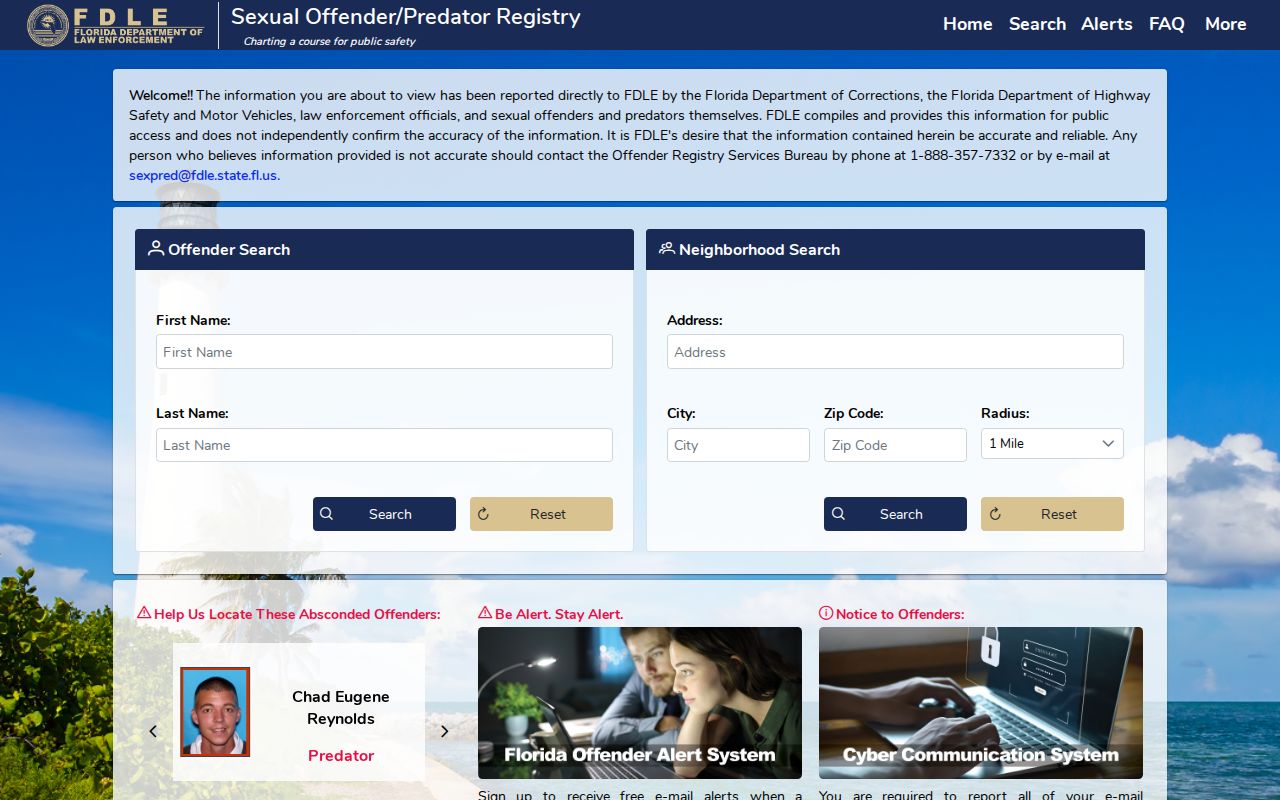
The registry screen shows a specialized official photo channel, not a countywide booking-photo gallery.
Hardee County Release Photo Copies
HCSO says adult booking information may be supplied to the local newspaper on request. An incident-specific sheriff post or news report may therefore contain an image even after the live jail view changes. Those copies can help locate the date, arresting agency, or name spelling, but the article may not be revised when the person is released or when the court case ends.
Commercial mugshot publishers and data aggregators may also mirror old photographs. No such site is linked here. Their records may be stale, attached to the wrong person, or stripped of the later disposition. A copied photo is not proof of current custody. Do not pay a removal service on the assumption that payment changes the HCSO, Clerk, or FDC source record.
The sound sequence is discovery, source match, and status confirmation. Match the image to an official booking identifier. Then use HCSO's release record, the Hardee Clerk case, or FDC release history to learn what happened after intake. The Hardee County released-inmate record path covers those status checks without treating an image as a custody result.
Florida Release Mugshot Removal Law
Florida Statutes §901.43 addresses a covered publisher's removal of an arrest booking photograph. A person or legal representative can send the publisher's registered agent a written request by registered mail with enough identifying information and the specific image. The covered publisher must remove it without charge within 10 calendar days and may not republish or redisseminate it. The law provides remedies for noncompliance.
This statute is not a universal deletion order. It does not expunge HCSO's booking record, seal a Hardee Clerk case, or require every government site to delete a lawful public image. It also does not make a paid service the proper path. For a private publisher within the statute, use the no-fee written process and preserve proof of delivery.
The official statute page shows the terms and scope of Florida's anti-pay-to-remove rule.
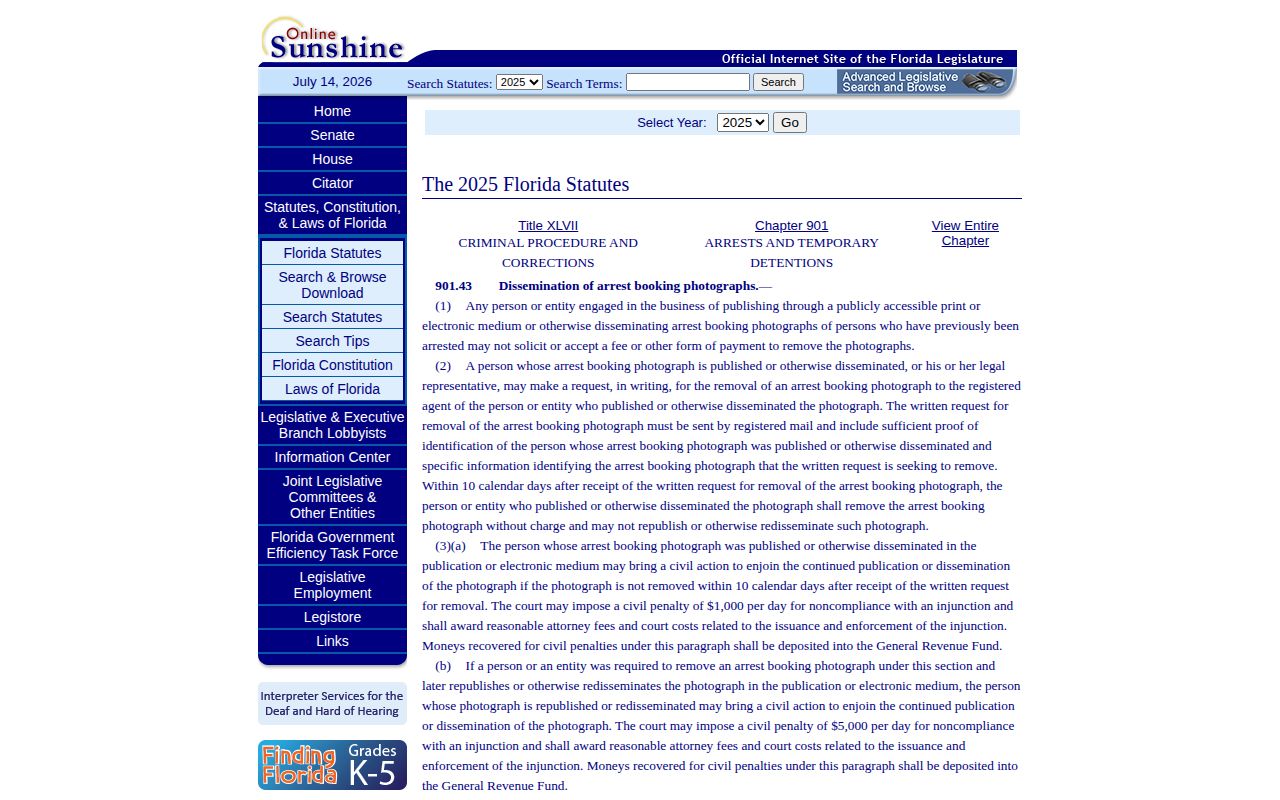
The statute governs covered private publication conduct; it does not rewrite the official custody history.
Hardee County Mugshot Expungement
The Hardee Clerk sealing and expunction process addresses source records when a person is legally eligible. A dropped or dismissed case does not erase an arrest history by itself. Florida's court-ordered process begins with an FDLE Certificate of Eligibility and then requires a petition and court action. A certificate does not guarantee an order.
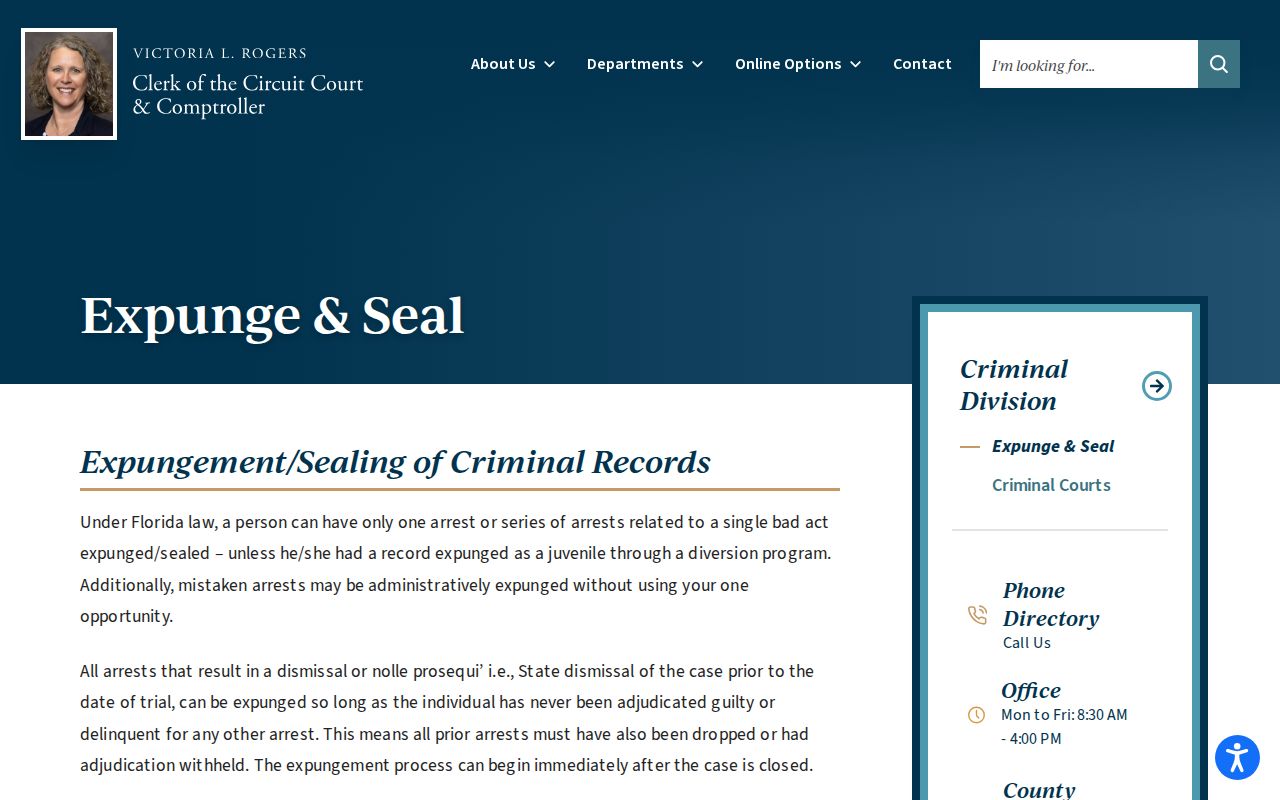
The Clerk guidance makes the local process visible and distinguishes a case outcome from legal record relief.
A sealed record is removed from ordinary public access while specified agencies retain access under law. Expunction has a different legal effect and generally limits what an agency with sealed-record access receives. FDLE also warns that automatic sealing of its state criminal-history record does not itself seal local records. Delivery of a court order to affected agencies may matter when a local booking photograph remains visible.
Do not try to reconstruct hidden content from commercial copies after lawful relief. Direct a source-record issue to the agency that holds that record. HCSO controls its booking image, the Clerk controls its court file, and FDC or FDLE controls its own state record.